

And How Should You Respond

Key Takeaways:
- AI is a real technological shift, but stock market reactions can still overshoot reality. Not every AI-related stock will be a long-term winner.
- Market concentration and volatility increase risk. When gains are driven by a small group of companies, disciplined investing matters even more.
- AI works best for investors when paired with a smart strategy that accounts for value, margin of safety, and diversification.
- Long-term investors who stay focused and avoid hype are better positioned to benefit from AI and the stock market over time.
The dot-com era is one that investors in the late 1990s will never forget. The internet was new and exciting, and clearly going to change the world. Both the public and markets knew it.
Back then, tech companies didn’t need much more than a website and a big promise to go public. And because no stock investor wanted to be the one who “missed out,” their prices took off. That mix of excitement and fear pushed prices beyond what the businesses could realistically support.
Then the bubble burst, causing many people to lose a lot of money. There are even companies that vanished almost overnight. Only a few, Amazon being the most famous example, made it through and eventually justified the early optimism.
AI and The Stock Market
When people talk about an AI stock market bubble, they’re really asking the same question: are we watching a real technological shift unfold, or are markets getting ahead of themselves as they did in the 90s?
What Is Really Happening With AI?
At first glance, it’s easy to draw parallels between what happened in the dot-com era and AI and the stock market today. Stock prices tied to AI have risen extremely fast, and the headlines of their new valuations are everywhere.
For instance, Goldman Sachs calculates that the value of companies directly involved in or adjacent to AI has increased by over $19 trillion since the launch of ChatGPT in November 2022.
Similarly, Alphabet’s (Google) shares doubled in value within seven months to $4 trillion as Gemini, their large language model (LLM), gained market share against other players.
The Differences
There’s that familiar fear of missing out once again, but this isn’t a perfect replay. One of the big contrasts between the dot-com boom and AI and the stock market is that the technology is past the stage of being just a concept or a promise and is already being used across industries. Another important difference is that a lot of the dot-com companies were public, but several AI startups are private.
For example, healthcare companies are using it to analyze data faster, while financial institutions, like stock traders, are even deploying AI to analyze market trends and manage risk.
In other words, unlike the internet in the 90s, AI has moved beyond just being a theory and into day-to-day business operations.
Real, Established Businesses are Involved
Another key distinction is that most of today’s major AI players have real revenue, strong cash flow, and global demand for their products. We’re talking tech giants like Nvidia and Microsoft.
These are established companies that are investing heavily in AI because it strengthens what they already do, not because it’s their main product.
AI Investment Sits Within Reasonable Bounds
Speaking of investment, one of the loudest concerns around AI and the stock market is the sheer amount of money being poured into AI infrastructure, with estimates suggesting the spending could reach several trillion dollars over the next decade.
However, these numbers don’t look as extreme as the headlines suggest when you zoom out. Investment spending in the IT boom of the late 1990s peaked between 1.5% and 2% of U.S GDP, while current AI investment sits around 1% of GDP.
Risks, Volatility, and Bubble Behavior
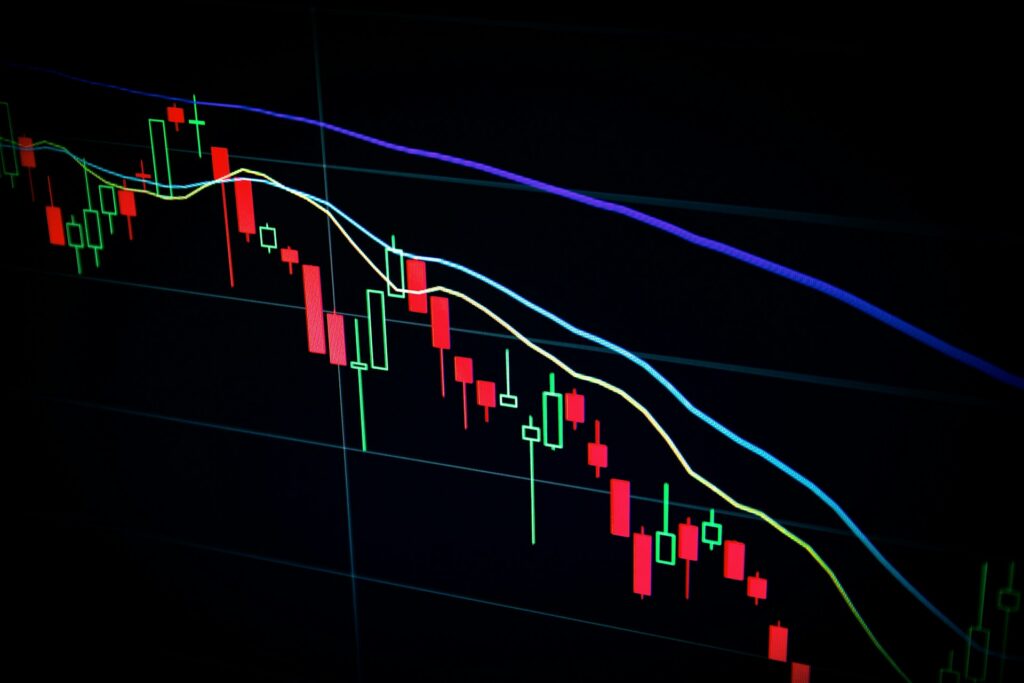
That said, not everything tied to AI and the stock market is grounded in factuality. Some stocks have gone up on excitement alone, and this is mostly what feeds concerns about an AI stock market bubble.
In some cases, valuations have moved far ahead of earnings, leaving little room for error. This is risky because even strong companies can see their stock prices fall if growth slows or their investment spending fails to deliver results as fast as investors expect.
The “Magnificent Seven”
A big reason for the market’s volatility is that much of the recent growth has been driven by a small group of large technology companies.
This has led to what many investors now call a “Magnificent 7” market, where a handful of U.S. tech giants: Apple, Microsoft, Amazon, Nvidia, Meta, Alphabet, and Tesla account for an outsized share of market gains.
The market becomes more sensitive when so much performance is concentrated in a few names because prices can swing with every new announcement or quarterly report. Even a rumor can dramatically influence stocks.
Separate the Numbers From Speculation
That being said, past bubbles offer many lessons in today’s case of AI and the stock market. The first of which is that not every company survives a technological shift, even when the technology itself succeeds. The internet changed the economy, but many stocks tied to it never recovered.
Secondly, stock prices can still fall sharply simply because investor expectations were too high, not because the idea was wrong. This is where the risk of an AI stock market bubble shows up.
Like with every smart investment, you can reduce your risk by understanding which companies have real earnings, strong infrastructure, and sustainable growth.
How AI Can Benefit Stock Investors
While the risks get plenty of attention, we must remember that there’s a reason why AI and the stock market have become so closely linked in the first place.
Productivity and Efficiency Gains
The core of AI is to help people do more with less, which is what most companies are endeavoring to take advantage of.
Some of the key ways AI helps businesses include:
- Automating repetitive tasks
- Improving data analysis
- Speeding up decision-making
- Improving customer experiences
- Optimizing operations like supply chains
This efficiency and boost in productivity often translate into higher profit margins and stronger growth over time, two things the stock market tends to reward.
Long-Term Growth
The above advantages also compound for companies that successfully integrate AI into their business models because it can strengthen competitive advantages and open up new revenue streams. This creates long-term momentum rather than one-off growth.
Technology firms might be at the forefront but these advantages stretch well beyond Silicon Valley. Together, they explain why many investors view AI in the stock market as a long-term investment theme rather than a short-term trade.
How Smart Investors Can Make AI Work for Them
It remains to be seen whether we’re in an AI stock market bubble or not. Time will tell. However, it certainly affects the entire market because a collapse could drag down the values of other companies in your portfolio, even if you have not actively invested in technology shares.
However, here are a few tips to protect yourself as best as possible:
- Look at the fundamentals: Like with any other stock investment, choose companies with strong revenue, healthy cash flow, and a clear path to profitability.
- Invest in companies with a margin of safety: Value investing still applies in high-growth areas. Look for companies trading below their worth, not the hottest AI stock. We’ve already seen how popularity can drive up prices.
- Diversify your investments: AI may be a powerful theme, but putting too much capital into one sector or a handful of stocks increases risk. Round out your portfolio with lower-risk investments or less glamorous sectors that generate strong cash flows.
- Let volatility work for you: Volatility can actually be a good thing for patient investors. Use price swings to add quality companies to your portfolio at more reasonable valuations.
- Think strategically, not emotionally: Successful investing in AI and the stock market comes down to disciplined analysis and realistic, long-term expectations, while reacting emotionally often leads to buying high and selling low.
Final Thoughts
AI is reshaping industries, but it isn’t rewriting the rules of investing. As we’ve seen before, transformative technology can create real, long-term value while still creating periods of volatility.
The challenge for investors is to engage with AI and the stock market thoughtfully and responsibly.
How Does AI Fit Into Your Portfolio?
WealthArch Investment Services can help you cut through market noise with our value investing, research-driven approach.
Schedule a free consultation today to discuss how your portfolio can stay resilient no matter where the next market cycle takes us.